


Systems in practice · Systems Before Influence

Systems in action.Impact that accumulates.

Behind an influential presence are decisions, roles and knowledge working together. See how the approach becomes practice in media, capacity building and protecting work from fragmentation and risks.

From understanding to operations to reviewable impact.The approach in practice
Applications and cases

Real-world experiences.
What works behind them.

Work connecting the approach to a real need. Each experience has its context, intervention and outputs, from organizing media and content to building capability that stays within the team.

A visual concept of an integrated digital influence system connecting stories, content, programs, campaigns, distribution channels, data and measurement in one operating system.
Visual concept from the case study
Media and content systems

From Content to an Integrated Influence System: The Besterra Now Case

Developing an operating structure connecting story monitoring, the content bank and programs to production, distribution, archiving and measurement.

An experience within Besterra6 months
Inside the experience

Context

Many stories and materials, short content cycles and multiple platforms, without a shared connection explaining why material is produced, for whom and how its value accumulates.

Intervention

Building a cycle from noticing a signal and choosing a story through treatment, production, distribution, reuse, measurement and learning for the next cycle.

Outputs

  • A bank of stories and ideas
  • Programs and projects such as Gaza Walker and “With Ali”
  • Thematic campaigns including “Ecocide”
  • Digital assets ready for reuse and distribution
  • Connecting publishing results to subsequent production decisions
Read the full experience
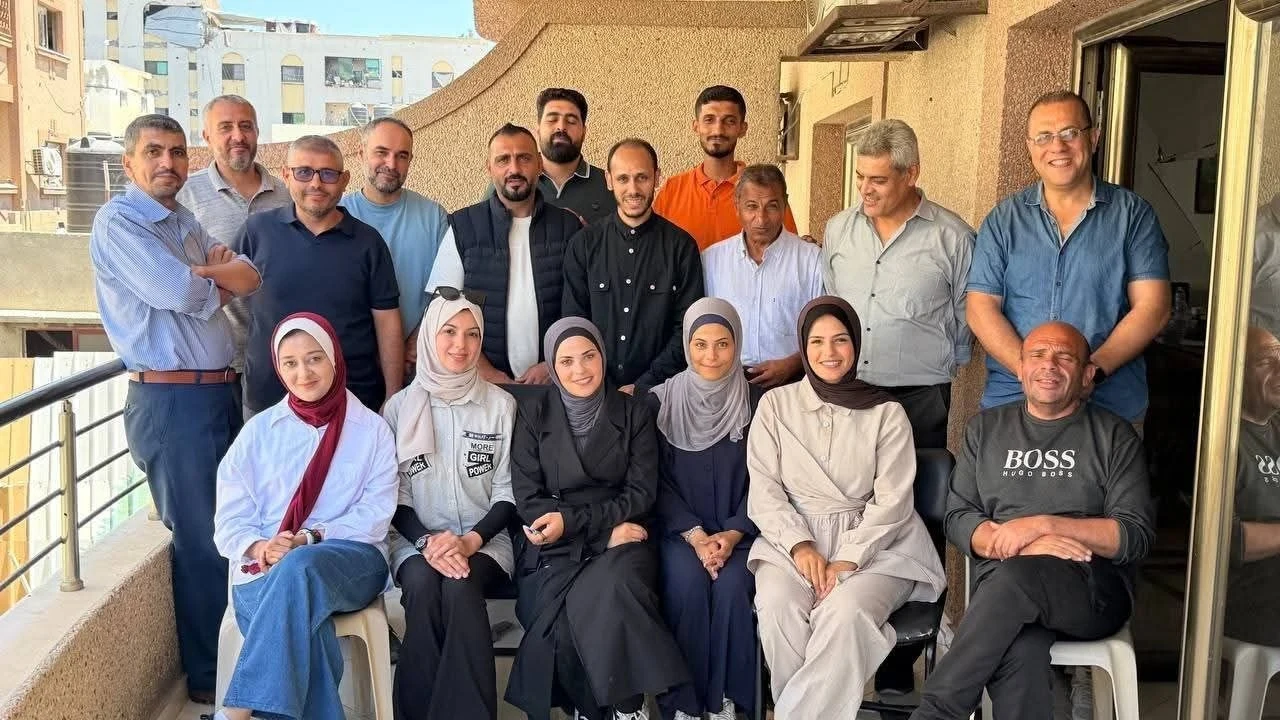
Group photo from the digital security program for journalists
From the published training experience
Training and capacity building

Digital Security for Journalists: From Knowledge to Practice Through Simulation

Training combining simulation, SAFE PRESS and Besterra Trainer OS to turn digital security knowledge into practical journalistic procedures.

In partnership with MIFTAH · Gaza3 training days · 19 participants
Inside the experience

Context

The need to turn general digital security knowledge into practical protection for accounts, devices, sources and data in journalistic work.

Intervention

Designing methodology, material, exercises, simulation scenarios and evaluation tools, and piloting the first Besterra Trainer OS version to track progress.

Outputs

  • Exercises, simulations and individual projects
  • Practical protection procedures and plans
  • Pre- and post-assessments and evaluation tools
  • Collecting outputs and evaluations within Besterra Trainer OS
  • Developing content into a self-study guide and practical workbook

My role in the experience

Designing the methodology, delivering the program and leading sessions; developing material, exercises, simulations and evaluation; participating in system assessment.

Read the full experience
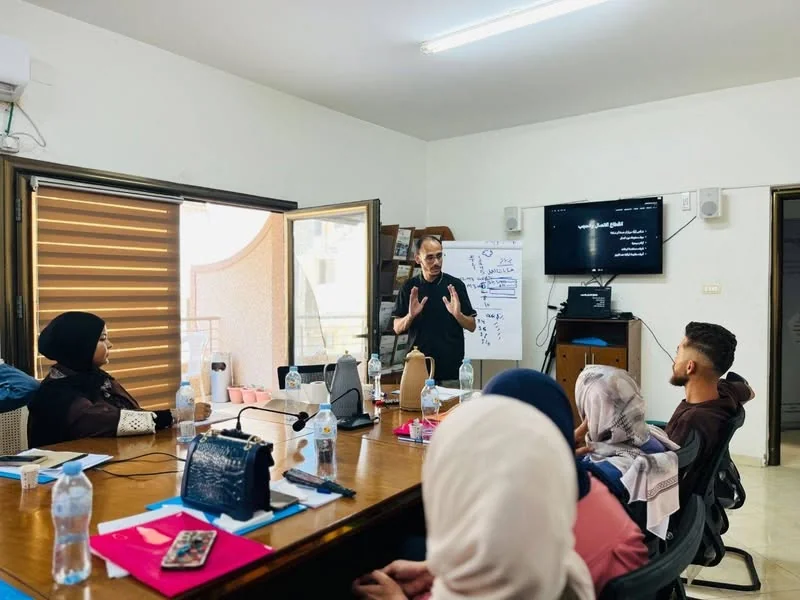
A training session from the official post about the organizational digital security program
From the published training experience
Safety and risk management

Gender-Sensitive Digital Security in Civil Society Organizations

Training connecting digital security with risk management, protection of people and data, and organizational incident response through a gender-sensitive perspective.

In partnership with MIFTAH · Gaza3 training days · 20 participants
Inside the experience

Context

The need to connect technical protection to the safety of people and teams and to organizational decision and response processes.

Intervention

Analyzing needs and risks, designing scenarios, exercises and simulations, and applying SAFE PRESS to real workplace challenges.

Outputs

  • Work-based scenarios and exercises
  • Organizational protection and response plans ready for implementation and review
  • Identifying exposure points and risks
  • Connecting response to decision, support and referral pathways

My role in the experience

Designing and delivering the program, leading practical sessions and developing an approach linking digital security, risk management and organizational safety.

Read the full experience

Every experience starts with understanding reality and is reviewed through what was built, what changed in the working approach and what can develop next.

What approach connects them?
Methodological systems · Systems Before Influence

One approach.
Three levels of work.

Thinking sets direction, operations turn it into practice and assessment clarifies the starting point. Different roles connect within one approach.

01 / Intellectual framework

The Systemic Influence School

A framework developed by Saed Hassunah to understand and build digital presence as an integrated system, starting from Systems Before Influence.

Explore the methodology

Principles guiding the direction

  • Clarity before reach
  • Positioning before content
  • Decision before implementation
  • Impact before noise
  • Knowledge transfer before permanent dependence
02 / Operations

STRATA OS — The approach in operations

The operational extension of the approach: turning direction into roles, decisions, procedures and knowledge that can be reviewed and sustained.

Explore how we collaborate

What becomes organized within the work?

  • Roles and responsibilities
  • Decision flow
  • Operating procedures
  • Archiving, measurement and knowledge transfer
03 / Situation assessment

STRATA — Understanding presence layer by layer

An initial gateway to understanding digital presence through five layers, organizing the situation, goal and obstacle to identify the next journey step.

Start assessing your situation

Start without signing in. Use your account to save conversations.

Five assessment layers

  1. Diagnosis
  2. Positioning
  3. Build
  4. Operations
  5. Measurement
Global influence frameworks

Ideas have references.
Application has context.

Three approaches to understanding and measuring impact and diagnosing behavior, followed by frameworks broadening perspective. Research theories and professional models are chosen according to the question and context.

Impact planning
ToC

Theory of Change

Theory of Change

Starts with the desired change, then links outcomes, conditions and activities expected to produce it. Helps clarify project logic and assumptions before choosing messages and channels.

What change do we want to achieve?
Reference Center for Theory of Change
Measurement and evaluation
AMEC

Integrated Evaluation Framework

AMEC Integrated Evaluation

Connects communication goals to inputs, activities and outputs, then audience understanding and changes leading to impact. Helps measure beyond publishing and reach.

What changed because of communication?
Reference AMEC
Understanding behavior
COM-B

Capability, Opportunity and Motivation

COM-B

Views behavior as the interaction of capability, opportunity and motivation. Helps diagnose barriers: does the audience need knowledge, enabling conditions or a different motivation?

What prevents the desired behavior?
Reference Susan Michie · Robert West
Applied behavioral framework
EAST

Behavior design with EAST

Easy · Attractive · Social · Timely

Combines easy, attractive, social and timely principles. Helps review registration or participation experiences and reduce barriers to the next step.

How can we make the next step easier?
Reference Behavioural Insights Team
Behavior design
B=MAP

Fogg Behavior Model

Fogg Behavior Model

Explains behavior through motivation, ability and a prompt occurring together. Helps simplify action and place prompts where the user can respond.

Does the prompt fit the moment and ability?
Reference BJ Fogg · Stanford
Communication theory
DoI

Diffusion of Innovations

Diffusion of Innovations

Explains how new ideas spread through communication channels over time within society. Helps understand gradual adoption and the role of trial, trust and relationships.

How does adoption move between groups?
Reference Everett M. Rogers
Persuasion theory
ELM

Elaboration Likelihood Model

Elaboration Likelihood Model

Explains differences in processing messages through deep consideration of arguments or reliance on other cues. Helps align messages with audience interest and capacity to process information.

How does the audience process this message?
Reference Richard Petty · John Cacioppo
Professional communication model
PESO

Integrated communication channels

PESO Model®

Combines paid, earned, shared and owned media in a connected plan. Defines each channel's role and how channels support one another rather than repeat messages without coordination.

How do channels work as one system?
Reference Gini Dietrich · Spin Sucks
Professional marketing framework
RACE

Marketing journey planning

RACE Planning Framework

Organizes the customer journey from reach and interaction to conversion and lasting relationships, based on a clear plan. Distributes goals and indicators across digital experience stages.

Where does the journey stop, and what comes next?
Reference Dave Chaffey · Smart Insights
STRATA · Initial assessment

Before the next step,
understand where you stand.

Start with an initial assessment of your digital presence. Organize the context, identify gaps and discover what deserves your attention first.

Find your starting point