

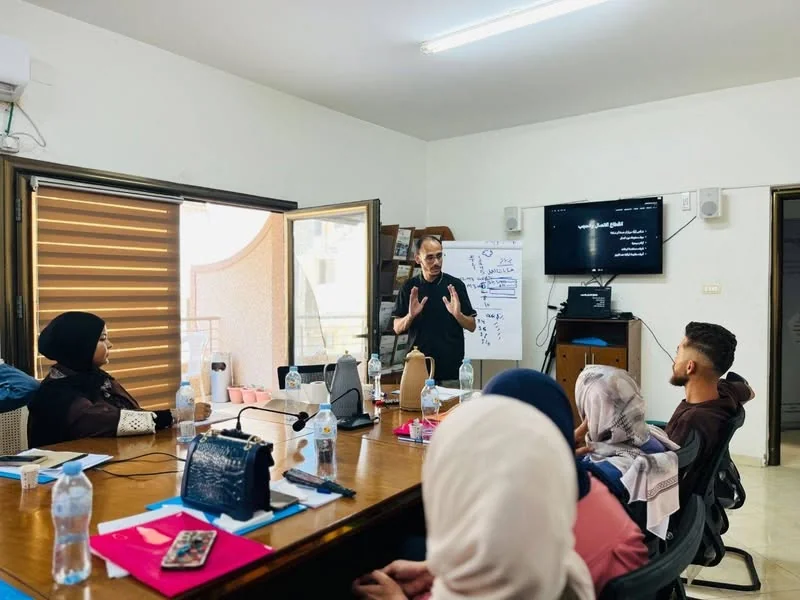
- Participants
- 20
- Training format
- In person
- Duration
- 3 training days
Organiser: The Palestinian Initiative for the Promotion of Global Dialogue and Democracy — MIFTAH.
The training approached gender-sensitive digital security by connecting the protection of people to the protection of data and systems. It used SAFE PRESS as a practical framework for identifying risk, assessing threats, strengthening accounts and devices, securing communications, protecting sources, reducing exposure, documenting evidence and initial incident response. It also covered threat modeling, account and device protection, managing files, data and sources, and forms of gender-based digital violence. Response approaches emphasized safety, dignity and avoiding blame of the person harmed, leading to organizational protection and response plans ready for implementation and review.
My role in the experience
I designed and delivered the programme and led its practical sessions, developing an approach that connects digital security with risk management, organisational safety and the protection of people and teams.
My role included analysing needs and risks, building scenarios and exercises, leading simulations and discussions, and turning participants’ workplace challenges into practical cases that help organisations develop more realistic, actionable response procedures.
Participants’ profile
Executive directors, media managers and people in positions of responsibility in civil society organisations whose work involves information, communication, team management, decisions, and digital and organisational risks.
Location
Gaza City, Palestine.
Training objectives
The training aimed to improve participants’ ability to understand and manage digital risks within an integrated organisational context, rather than limiting digital security to technical tools and procedures.
It focused on identifying points of exposure, protecting accounts, data and information, analysing risks affecting people and teams, responding to digital incidents and building procedures that organisations can apply.
It also aimed to deepen understanding of digital security’s relationship with organisational safety, account for gender-related dimensions, and connect technical response with psychosocial and community support and referral pathways when incident effects extend beyond technology.
Outcomes and learning
The programme showed the importance of treating digital security as part of broader risk management and organisational safety, extending response beyond account or device protection to people, information, teams and continuity of work.
Simulations and scenarios drawn from actual workplaces allowed proposed procedures to be assessed against realistic challenges. They highlighted the need for closer links between digital incident response, internal organisational procedures, decision-making, support and referral pathways.
Interaction with participating leaders also helped assess the training approach and identify opportunities to improve tools and learning materials, particularly where digital risks intersect with individual and team safety and the psychological and social dimensions of incidents.